
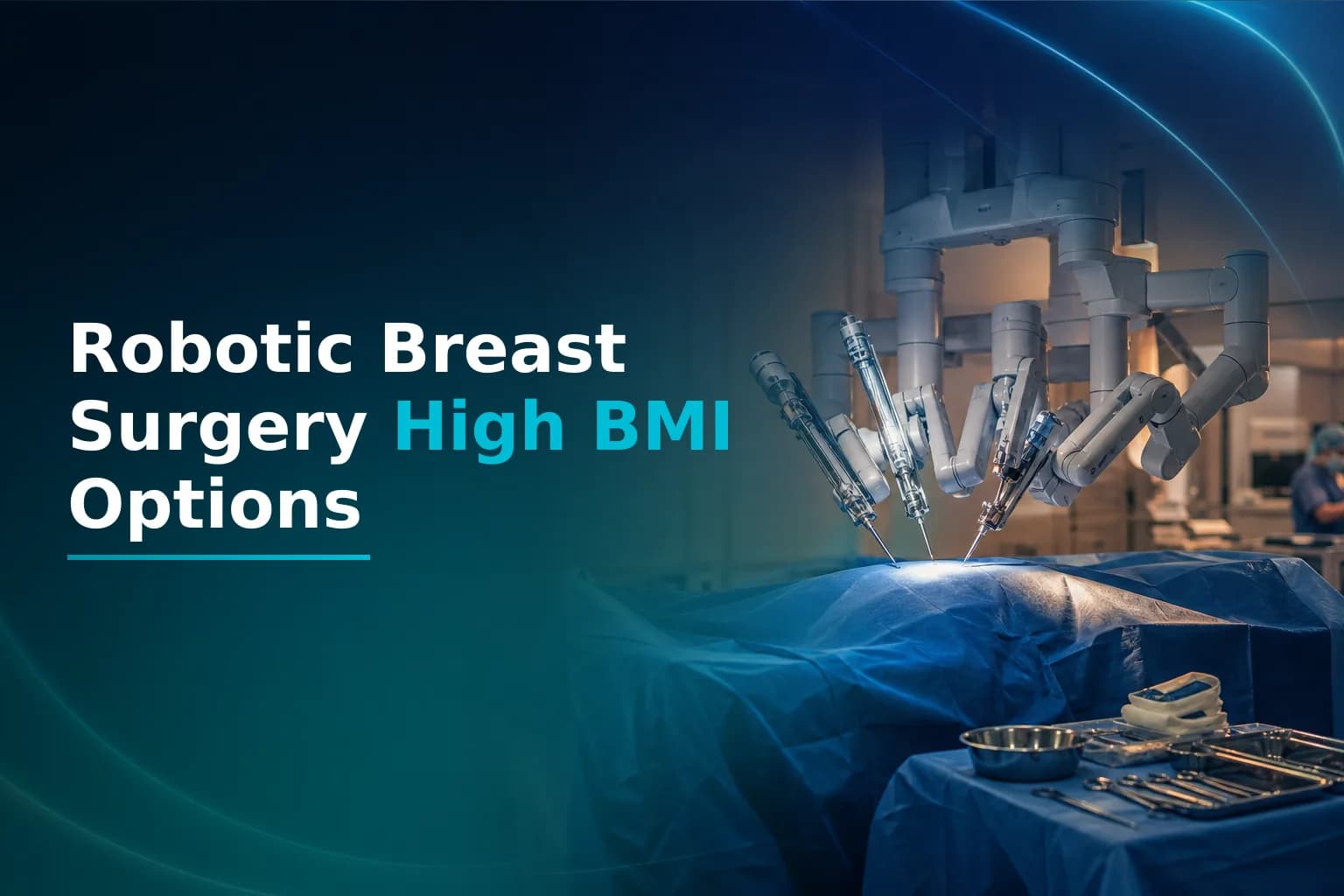
If you've been told your BMI is high and you're wondering if robotic breast surgery is still an option - the short answer is yes, most likely. A higher BMI does increase certain surgical risks, but it rarely stops robotic breast surgery from happening. What matters most is the full picture: your overall health, the surgery type, your surgeon's experience, and where you choose for treatment. This article reviews the evidence and compares your options in the UK and India.
What does BMI mean for breast cancer surgery?
BMI - or body mass index - is your height-to-weight ratio. According to NICE guidance, a BMI of 30 or higher is obese, and a BMI between 25 and 29.9 is overweight. Many women with breast cancer have a BMI above 30, so this is a common question - and one worth asking your doctor directly.
For breast cancer surgery, BMI is not a simple pass-or-fail test. Your surgical team considers it alongside other factors when checking your fitness for anesthesia and recovery. A higher BMI raises the risk of certain post-surgery problems - including wound infection, slower healing, blood clots (deep vein thrombosis), and longer anesthesia time. These risks are real, and a good surgeon will explain them.
Research does show that obesity raises the risk of wound problems and reoperation after breast reconstruction. But this doesn't mean a blanket BMI cutoff for breast cancer procedures is needed. It's a risk to manage - not a reason to refuse appropriate surgery.
Does a high BMI rule out robotic breast surgery?
Usually no. Surgical teams say they assess each case individually. That means your BMI counts, but so do your heart health, lung function, blood sugar, smoking history, and other factors - not just your weight alone.
A 2025 study looked at breast cancer patients with different BMIs. Using a BMI of 30 as the cutoff, complication rates were nearly identical between groups - 33% vs. 32%. This suggests that with careful patient selection, outcomes can stay similar across different BMIs, especially for breast-conserving surgery.
Free-flap reconstruction is different. This surgery takes tissue from your abdomen or back to rebuild the breast. A BMI above 35 raises the risk of overall problems, unexpected return to the operating room, and readmission for these complex procedures. If your plan includes DIEP flap reconstruction with a robotic mastectomy, your team will review your weight and health carefully before moving forward.
With implant-based reconstruction after a robotic mastectomy, the limit is usually higher. Some specialist centers take patients with BMIs up to 40, as long as other risks - like poorly controlled diabetes or heart disease - are managed well at surgery time. For more on how other health problems affect surgery risk, see our article on robotic breast surgery with diabetes or heart disease.
You can also read more about who is eligible for robotic breast cancer surgery in our guide.
Does a robotic approach reduce risk for higher BMI patients?
Yes, it may help. Robotic breast surgery uses small entry points - usually 8 to 12 millimeters - instead of one large chest cut. This approach means less blood loss, fewer wound infections, and faster return to normal activity compared to traditional open surgery. For patients with a higher BMI - where wound healing faces more challenges and larger cuts carry more risk - smaller entry points can really help.
A 2024 review of robotic vs. conventional autologous breast reconstruction found that robotic methods had good outcomes in carefully selected patients. Surgeon experience was key: teams doing more robotic cases consistently got better results, regardless of patient BMI.
How does robotic breast surgery access compare for high BMI patients in the UK vs. India?
| Factor | NHS (UK) | UK Private | India (Private) |
|---|---|---|---|
| BMI and surgical access | No national BMI cutoff for breast cancer surgery; each case is assessed individually; pre-surgery preparation may be advised for BMI above 35 | Individual surgeon and hospital policy; some centers decline patients with BMI above 40 for complex reconstruction | Assessed on clinical merit; most specialist accredited centers review high BMI cases one by one with no fixed upper cutoff |
| Robotic breast surgery availability | Very limited - only a few NHS trusts offer robotic breast surgery | Available at some UK private hospitals with robotic programs | Widely available at JCI-accredited and NABH-accredited hospitals in major cities like Mumbai, Chennai, Delhi, and Hyderabad |
| Indicative cost (GBP, 2025) | NHS-funded if clinically eligible; no direct patient cost | Approx. 15,000-35,000 GBP - varies by procedure and center; always request a written quote | Approx. 5,000-9,500 GBP equivalent - varies by hospital and procedure; request a written itemized quote |
| Typical wait from referral to surgery | NHS targets treatment within 62 days of referral; robotic waits may be longer where availability is low | Usually 2-4 weeks once funding is confirmed | Often 1-3 weeks from initial inquiry to scheduled surgery date |
| Pre-surgery support | Available via GP, NHS dietitian, and clinical nurse specialist pathways | Private dietitian, physical therapy, and pre-op assessment available at added cost | Pre-surgery review and support often included in specialist center packages |
The biggest gap is availability. The lack of robotic breast teams in the NHS means many women - regardless of BMI - are offered only traditional open surgery through their NHS pathway. Robotic surgery at an NHS trust is rare, not common. If a minimally-invasive approach matters for your recovery and appearance, looking into UK private or international options is practical, not extreme. For a detailed cost breakdown, see our article on breast reconstruction costs: UK vs. India compared.
Cost note: UK private estimates are general ranges based on public hospital pricing data. India estimates come from specialist hospital and medical tourism data from 2024-2025. These are starting points only - always ask for a detailed written quote for your procedure and situation before committing.
Why do some women with a higher BMI look to India for robotic breast surgery?
Three things come up when UK patients with higher BMIs consider this option.
More robotic expertise available. India's top cancer hospitals have built strong robotic surgical programs over the past decade. Hospitals in Mumbai, Chennai, Delhi, Hyderabad, and Bengaluru offer nipple-sparing and hidden-scar robotic mastectomy as a standard option - not a rare choice dependent on one specialist. Many hold JCI (Joint Commission International) or NABH (National Accreditation Board for Hospitals and Healthcare Providers) accreditation, which are internationally recognized quality standards that cover safety, staffing, and results tracking.
More cases mean better results. Robotic surgical outcomes improve with case volume. A surgeon who has done hundreds of robotic breast procedures has more skills for handling the body differences that come with a higher BMI or larger breast. For women where anatomy matters, choosing a high-volume robotic center may give better results than a lower-volume program building robotic skills.
Faster access. For patients paying their own way, shorter waits and much lower costs make India worth looking at closely. For a woman just diagnosed and already anxious, getting a surgery date within weeks - instead of waiting months for a referral decision - can ease a big part of the stress.
If you're not sure your current UK plan covers all robotic options for your BMI and tumor type, consulting the Art of Healing Cancer team before committing may help. An independent review from a robotic breast specialist may bring up options your current path hasn't mentioned yet.
What can you do before surgery if your BMI is high?
If your surgical team is worried about your BMI, there are practical steps that may lower your surgical risk or widen your choices. Always discuss these with your oncologist first, since timing matters. Surgery for breast cancer shouldn't be delayed significantly for weight loss, and your care team will advise if a short preparation period fits your situation.
- Work with a registered dietitian for modest, sustained weight loss before surgery. Even a 5-10% drop in body weight may lower anesthetic risk and improve wound healing.
- Build cardiovascular fitness through low-impact exercise - walking, swimming, or cycling - as your care team says. Better cardiovascular fitness lowers anesthetic risk at any BMI.
- Stop smoking if you smoke. Smoking raises wound infection risk and slows healing after breast surgery.
- Control any related conditions like type 2 diabetes or high blood pressure before your surgery date.
- Ask your team about pre-surgery physical therapy or prehabilitation. Some specialist centers include this in their surgical package at no extra cost.
For women looking into over-the-counter nutritional support during pre-surgery preparation, see Weight Management options at Ayurnomics to discuss with your dietitian alongside your clinical plan.
Be clear about this: only do pre-surgery weight management with your clinical team's knowledge and approval. Never change your diet, exercise, or supplements without talking to your care team first.
When to talk to your doctor
If you've been told your BMI may limit your access to robotic breast surgery or a particular reconstruction type, ask your care team which procedures are affected and why. Ask if a short pre-surgery preparation period is possible without hurting your cancer outcome. If you feel the answer doesn't cover all minimally-invasive options for your situation, getting a second surgical opinion is reasonable and recommended.
You can start a private inquiry through BreastCancer.One, where female coordinators will guide you through your options.
This article is for general information only and is not medical advice. Always talk to your oncologist or care team about your specific situation.