
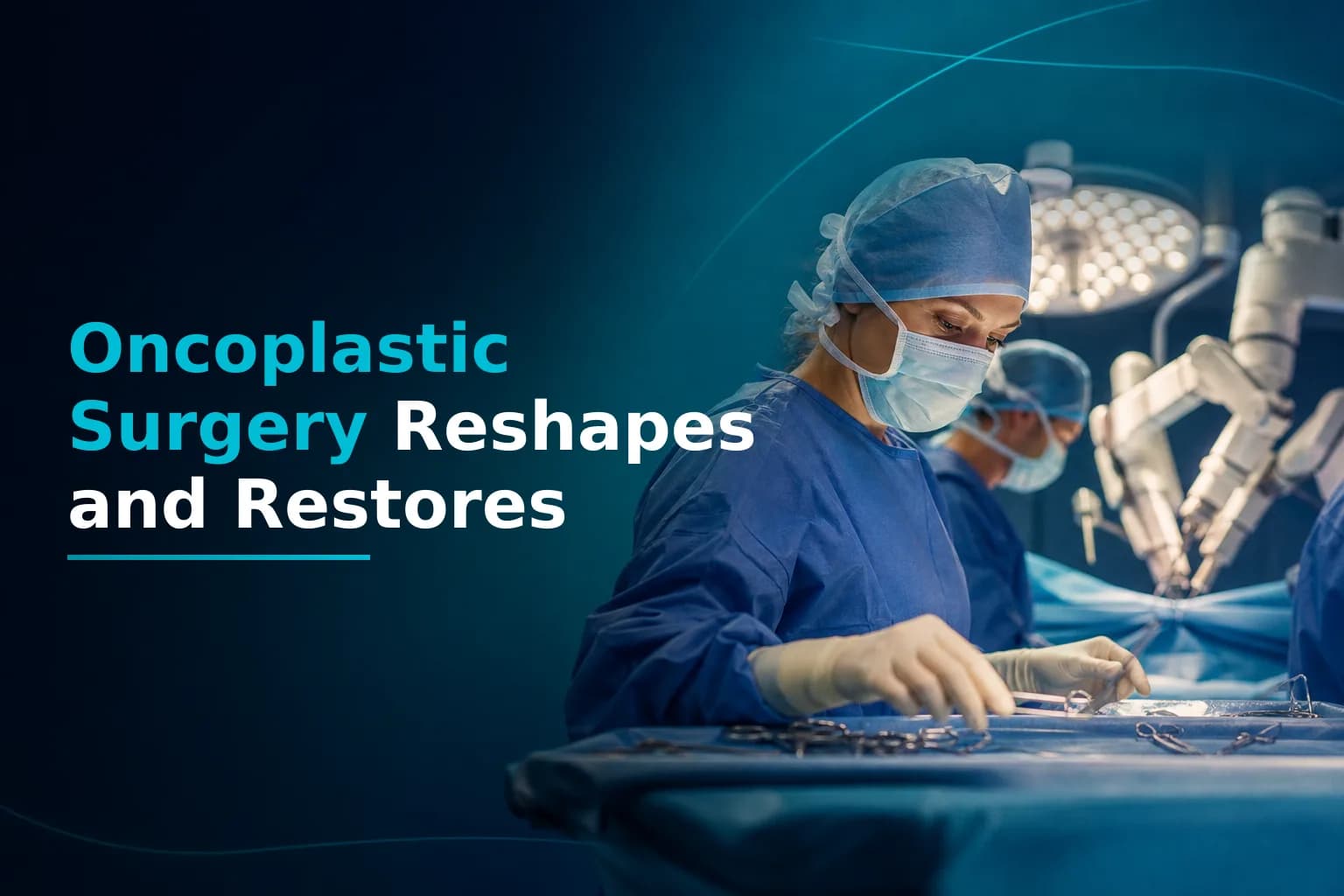
Oncoplastic breast surgery combines removing a breast tumor with plastic surgery techniques to reshape the breast in the same operation. It aims to clear cancer safely while reducing the visual impact on your breast. Most women who have it report better cosmetic results than with a standard lumpectomy alone.
If you have been told you need breast-conserving surgery - a lumpectomy or wide local excision - you may have heard the word oncoplastic mentioned. This approach is not a single procedure. It is a range of techniques that allow a surgeon to remove more tissue when needed, then reshape what remains so the breast looks as natural as possible. For many women, it means keeping more of their breast intact while still achieving safe cancer clearance.
What Is Oncoplastic Breast Surgery?
The word oncoplastic joins two ideas: oncology (cancer treatment) and plastic surgery (reshaping). A surgeon removes the tumor together with a safe margin of healthy tissue around it, then immediately reshapes the breast rather than leaving a gap or hollow. The other breast may also be adjusted to match if needed. Everything happens in a single operation.
Standard breast-conserving surgery - a wide local excision - focuses on getting clear margins around the tumor. If the tumor is large relative to the breast, or in a difficult position, removing it can leave a noticeable dent or distortion. Oncoplastic techniques address that problem at the time of the original operation, not as a separate repair months later.
Studies show this approach does not compromise cancer safety. Doctors report that oncoplastic breast-conserving surgery has similar re-excision and local recurrence rates to standard breast-conserving surgery, while women report better cosmetic results.
How Does Oncoplastic Surgery Compare to Standard Lumpectomy?
| Factor | Standard Wide Local Excision | Oncoplastic Breast-Conserving Surgery |
|---|---|---|
| Cosmetic outcome at 5 years | Around 48% rated good or excellent by independent panel | Around 76% rated good or excellent by independent panel |
| Volume that can be removed safely | Limited; large defects may distort the breast | Larger volumes possible; reshaping closes the defect at the same time |
| Risk of visible breast distortion | Higher, especially in smaller or drooping breasts | Lower; the surgeon repositions surrounding tissue during surgery |
| Same-day reshaping and symmetry | Not included | Yes, including adjustment of the other breast if needed |
| Surgeon training required | Breast surgeon | Oncoplastic-trained breast surgeon or combined surgical team |
| Availability on the NHS | Widely available at most breast units | Available at specialist oncoplastic centers; varies by region |
Cosmetic outcome figures are drawn from a randomised controlled trial comparing oncoplastic reshaping with standard breast-conserving surgery closure. Source: National Library of Medicine, PMC9356147.
The key finding is clear. Women who receive oncoplastic reshaping are significantly more likely to rate their cosmetic result as good or excellent five years after surgery. That gap matters in a practical way: a visible dent or noticeable asymmetry can affect how a woman feels about her body for years after treatment ends.
Who Might Be a Candidate for Oncoplastic Surgery?
Not every woman with breast cancer will need or benefit from an oncoplastic approach. Your surgical team will assess your individual situation carefully.
- Tumor size relative to breast size. If the tumor takes up a significant portion of the breast, standard excision may leave an obvious hollow. Oncoplastic techniques can fill or reshape that area using the remaining breast tissue.
- Tumor position. Tumors near the nipple, in the lower pole of the breast, or in a central position can be difficult to remove without distorting the breast shape. Oncoplastic surgery often works well for these locations. For more detail, see our article on robotic lumpectomy for centrally located breast tumours.
- Desire to avoid mastectomy. Oncoplastic techniques can extend the option of breast conservation to cases where a standard lumpectomy might not achieve an acceptable cosmetic result. This means some women who were previously recommended mastectomy may now have a conservation option.
- Breast size. Women with moderate to larger breasts are often good candidates for volume displacement techniques that incorporate a breast reduction at the same time as tumor removal.
Oncoplastic surgery is not always the right path. If a tumor is widespread, involves multiple sites in the breast, or if clear margins are not possible with conservation, a mastectomy may still be your best option. A direct discussion with your surgical team - and sometimes a second opinion from a specialist - is the most reliable way to understand what is available to you.
What Are the Two Main Oncoplastic Techniques?
Surgeons broadly divide oncoplastic approaches into two types, based on how they manage the space left by tumor removal.
Volume displacement uses the breast's own remaining tissue to fill the gap. The surgeon rearranges and reshapes the surrounding breast tissue. Techniques based on breast reduction (mammoplasty) or breast lift (mastopexy) patterns fall into this group. Simpler displacement approaches work well for smaller defects; more complex techniques can manage larger excisions where a significant portion of breast volume has been removed. The result is usually a well-shaped, lifted breast, with the other breast adjusted to match if needed.
Volume replacement brings in tissue from elsewhere on the body to fill the defect. The surgeon may use small flaps of skin and fat from the side of the chest or the back. This approach is more common when the breast is small, or when the volume removed is too large to compensate for by rearranging breast tissue alone.
A third, simpler option - sometimes called basic oncoplastic closure - uses careful tissue reshaping and wound closure immediately after excision to reduce puckering and visible asymmetry. A randomised controlled trial found that even this simpler approach significantly improved long-term cosmetic outcomes compared with standard closure, making it a meaningful step forward for many women.
Could Robotic Oncoplastic Surgery Be an Option?
Robotic surgery is beginning to enter the oncoplastic field. Traditional oncoplastic surgery is open surgery - the surgeon works through visible incisions on the breast surface. Robotic-assisted approaches use slender instruments controlled by a robotic system, often leaving far smaller external scars and allowing access through less visible points such as the armpit rather than the breast itself.
One emerging technique, the Oncoplastic Entirely Robot-Assisted Approach (OPERA), applies robotic technology to both mastectomy and flap-based reconstruction in the same procedure. Early results show this approach is feasible and that the robotic platform offers better three-dimensional visualization and greater precision during tissue harvest, which may support more accurate reshaping and reconstruction.
Separately, robotic nipple-sparing mastectomy with immediate reconstruction is already established at specialist centers in Asia and parts of Europe. Studies show that robotic breast surgery offers better surgeon ergonomics, greater visualization of the operating field, and smaller external scars for the patient - all of which are directly relevant to cosmetic outcomes in oncoplastic cases.
The honest picture: robotic oncoplastic surgery is still an emerging technique. The evidence base is growing quickly, but this is not yet a standard NHS offering. Specialist centers in India have been among the earliest adopters of robotic breast techniques, and some offer combined robotic reshaping and minimally invasive access in a single procedure. For more information on how hidden-scar cosmetic outcomes compare between conventional and robotic techniques, see our guide on hidden-scar robotic mastectomy for UK women considering India.
What to Expect During Recovery
Recovery from oncoplastic breast surgery varies according to the technique used. A basic oncoplastic closure after lumpectomy usually allows you to go home within one or two days, with most women returning to light daily activities within two to four weeks.
Volume displacement techniques - those based on reduction or mastopexy patterns - involve more extensive reshaping and tend to require longer recovery, typically four to six weeks before returning to most normal activities. You may have surgical drains for a short period, and you may have more bruising and swelling than after a straightforward lumpectomy.
Volume replacement procedures that use tissue flaps from elsewhere on the body generally involve longer recovery, depending on the flap type and the extent of the operation.
You will have visible scars after oncoplastic surgery. The goal is better breast shape and a more symmetrical result, not a scar-free outcome. Over several months, most scars fade and soften considerably. Your surgical team should provide guidance on scar care and a graduated exercise plan to support healing and shoulder movement. If reconstruction is part of your broader plan - whether alongside an oncoplastic procedure or after a mastectomy - it is worth understanding the full range of options, explored in detail in our guide to implant vs autologous reconstruction after robotic mastectomy.
Accessing Oncoplastic Surgery in the UK - and Further Afield
Oncoplastic breast surgery is available on the NHS at specialist breast units across the UK. Not every NHS breast unit offers the full range of oncoplastic techniques, however. Whether you can access a particular approach depends partly on where you live, which hospital you are referred to, and the training of your surgical team.
If you have been offered a standard lumpectomy and are worried about the cosmetic result, it is entirely reasonable to ask your breast surgeon whether an oncoplastic technique is an option. Requesting a referral to a specialist oncoplastic breast surgeon is also a reasonable step before you commit to a surgical plan.
Some women choose to explore private care or treatment abroad, either because they want faster access to a specialist or because they wish to consider robotic oncoplastic approaches that are not yet widely available in the UK. If you are weighing your options and want an independent review of your pathology reports and imaging before deciding, you can consult the Art of Healing Cancer team - they offer remote reviews for UK patients seeking a second opinion on your surgical plan.
If you would like to explore your options further, or to understand whether an advanced oncoplastic or robotic approach may suit your specific tumor and breast shape, you can make an inquiry through BreastCancer.One. Female coordinators are available to help you.
When to Talk to Your Doctor
Bring up oncoplastic surgery at your next surgical consultation if any of the following apply to you:
- You have been offered a lumpectomy and are concerned about the cosmetic result.
- Your tumor is large relative to your breast size.
- Your tumor is in a position that makes standard removal difficult without visible distortion.
- You want to understand whether breast conservation is a realistic option for your case.
- You are considering requesting a second opinion on your surgical plan.
This article is for general information and is not a substitute for medical advice. Always consult your oncologist or care team about your specific situation.